Full-Scale Ammonia-Nitrogen Wastewater Concentration and Recovery Using Membrane Capacitive Deionization
Date Published: December 12, 2025
Test Method and Process
The technical team developed an integrated packaged ammonia-nitrogen wastewater treatment system. As shown schematically in Figure 1, the system consists of 24 pairs of activated-carbon electrodes (20 cm × 40 cm) combined with anion- and cation-exchange membranes to form a membrane capacitive enrichment unit.
The operating sequence is illustrated in Figure 1(a). During charging, the membrane capacitive enrichment unit uses electrosorption to adsorb ammonium ions from the wastewater and temporarily retain them within the pores of a high-surface-area porous carbon material, while producing treated water with a low ammonium-ion concentration. After charging is completed, the water supply is stopped, allowing the ammonium ions adsorbed in the carbon pores to return to the membrane channels. During the subsequent discharge stage, a reverse voltage is applied, causing the ammonium ions to desorb and be released into the solution, thereby producing a concentrate with a high ammonium concentration.
The system can stably treat more than 1 m³/day and is applicable to influent concentrations below 1,500 mg/L as NH3-N. The concentrate is subsequently introduced into an air-stripping and recirculation recovery unit. Through air stripping, ammonium ions in the concentrate are converted to ammonia gas, thereby improving overall recovery efficiency. Depending on operational needs, the recovered ammonia may be used to produce resource-recovery products such as aqueous ammonia, ammonium chloride, and ammonium sulfate. The system is therefore designed to support the treatment, concentration, and resource recovery of ammonia-nitrogen wastewater.
Operating Conditions
-
Full-scale wastewater
Ammonia-nitrogen condensate - Wastewater conductivity 479 μS/cm; 1,076 mg/L as N
- Wastewater pH 10.41; adjusted to 8.41
- Operating voltage 2 V
- Operating cycle Charging: 50 min; regeneration: 30 min; concentrate discharge: 20 min
Test Results
The results obtained after concentration of the full-scale ammonia-nitrogen wastewater are shown in Figure 2. For the untreated wastewater, the peak conductivity reached 9,629 μS/cm, and the peak ammonia-nitrogen concentration in the discharge stream was 3,124 mg/L as N, corresponding to a concentration factor of 2.9. The relatively limited concentration performance was considered to be associated with the higher pH of the untreated wastewater.
The pH of the wastewater was therefore adjusted to 8.41. Following adjustment, the peak conductivity after concentration reached 34,250 μS/cm, and the peak ammonia-nitrogen concentration in the discharge stream was approximately 6,678 mg/L as N, corresponding to a concentration factor of approximately 6.2. This result may be attributable to the conversion of ammonia nitrogen primarily into charged ammonium ions (NH4+) after pH adjustment, which facilitated adsorption by the membrane capacitive deionization unit and improved the concentration performance.
When the concentrated ammonia solution was introduced into the air-stripping system, the ammonia-nitrogen removal efficiency reached 97.5%, and the ammonia-nitrogen recovery rate reached 72.88%.
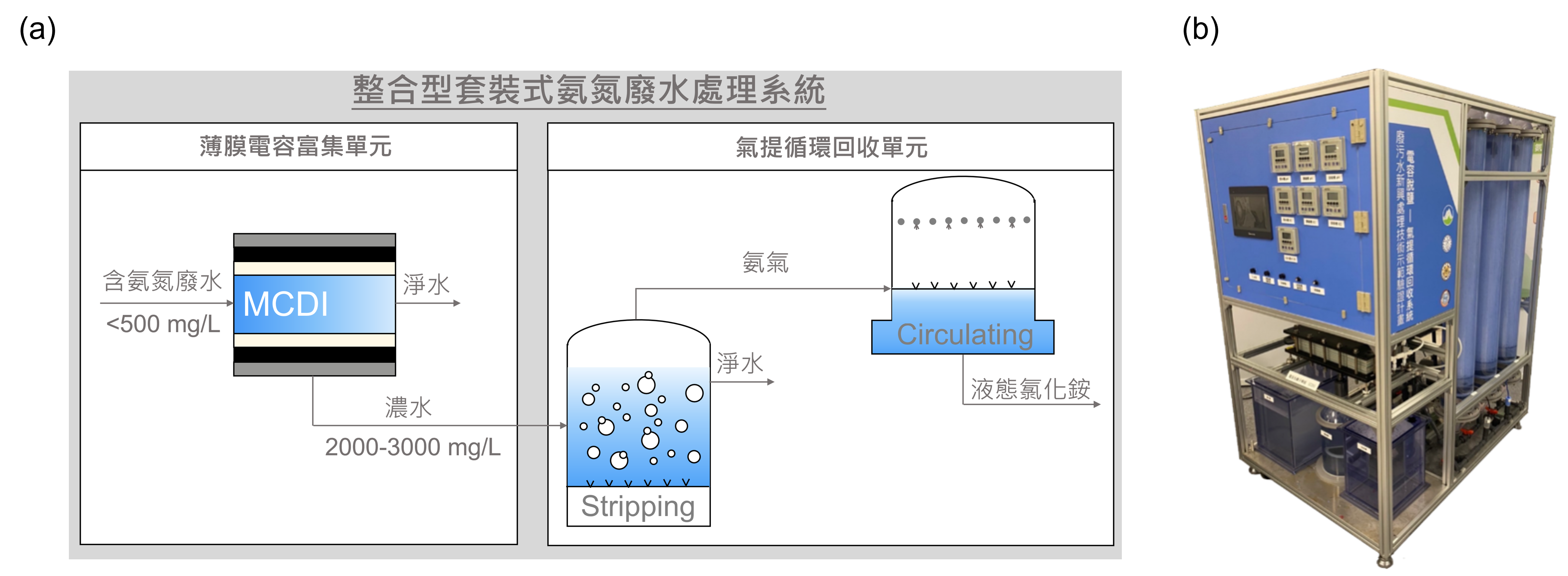
Figure 1. (a) Schematic diagram and (b) completed unit of the integrated packaged ammonia-nitrogen wastewater treatment system
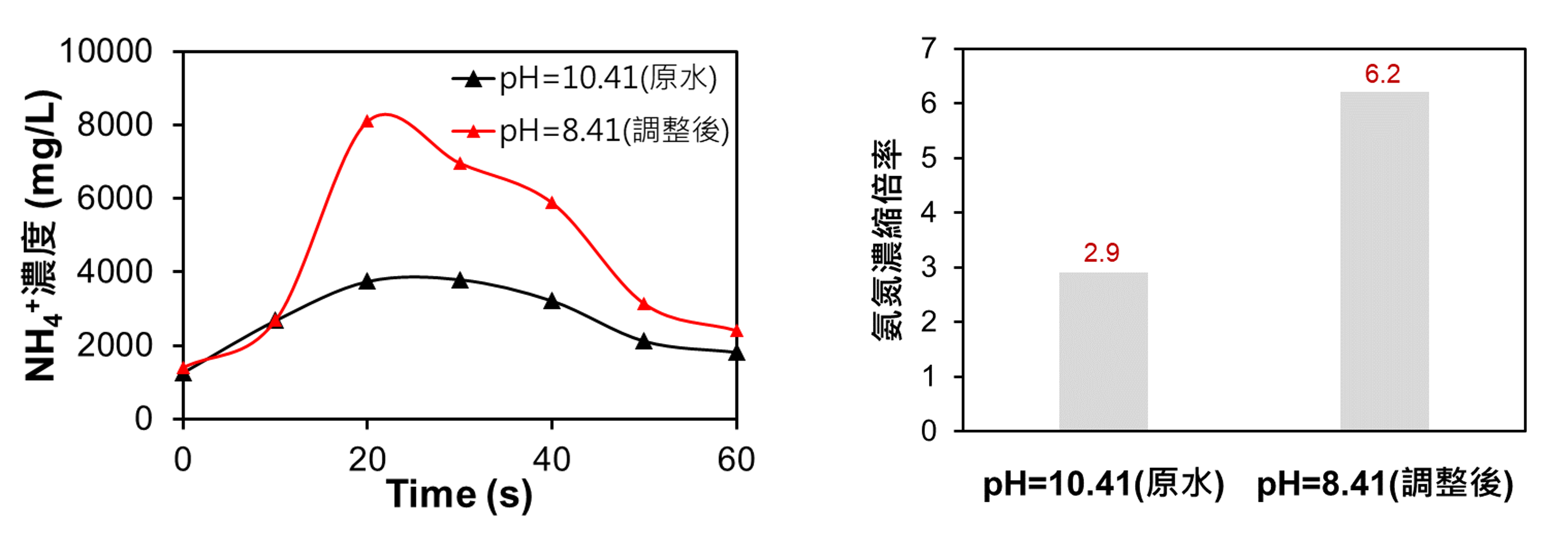
Figure 2. Variation in NH4+ concentration during the first minute of the discharge stage under different solution pH conditions, and the corresponding ammonia-nitrogen concentration factors
Ministry of Environment, 2023. Technical Results Report on the Demonstration and Promotion of Emerging Wastewater Treatment Technologies for Wastewater and Sewage.

